
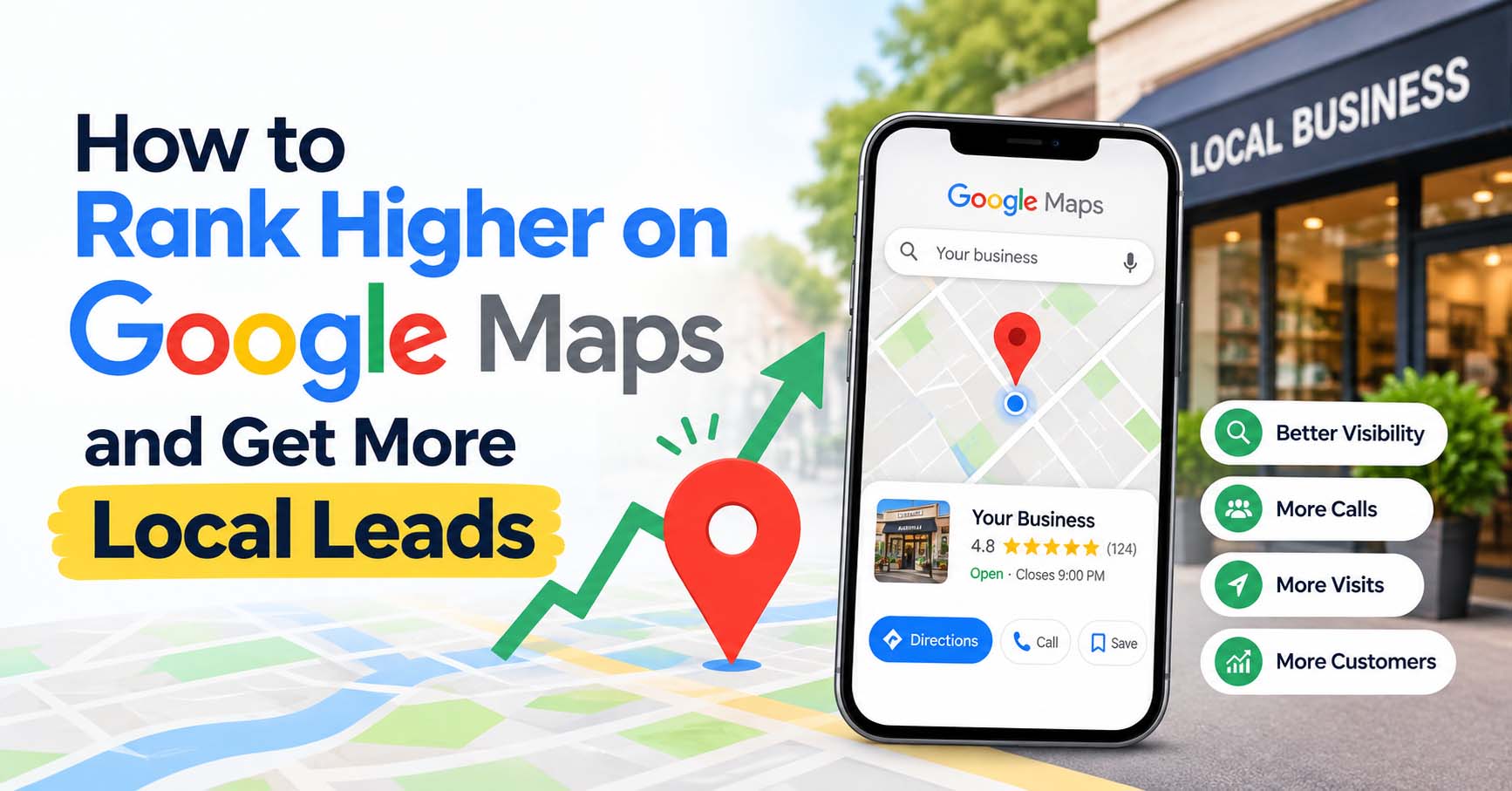
Search “glass repair near me” in your area right now. The three businesses that show up in that map pack? They’re getting the calls. Everyone else is invisible, no matter how good their work is.
We’ve spent years building our presence on Google Maps at Trident Glass Services, and we’ve learned exactly what moves the needle and what’s a waste of time. It’s the same groundwork any branding agency in Chennai would put in place before touching ad spend: get the fundamentals right first. This guide walks you through the real strategies that get local businesses seen, trusted, and called.
Why Google Maps Rankings Actually Matter
Most people don’t scroll past the map pack. They tap one of the top three listings, check the reviews, and call. If you’re not in that pack, you’re competing for scraps.
Here’s what Google actually looks at when deciding who gets top placement:
- Relevance – does your listing match what the person searched for?
- Distance – how close is your business to the searcher?
- Prominence – how well-known and well-reviewed is your business online?
You can’t do much about distance. But relevance and prominence? Those are entirely in your control.
Claim and Fully Complete Your Google Business Profile
This sounds basic. It’s also the step most businesses half-finish.
A complete profile isn’t just a name and phone number. It includes:
- Accurate business category (primary and secondary)
- Full service list with descriptions
- Business hours, including holiday updates
- High-quality photos of your team, work, and location
- A short, keyword-natural business description
We update our profile every quarter. Google rewards active listings over stale ones, and customers trust a profile that looks maintained.
Get Your NAP Consistent Everywhere
NAP means Name, Address, Phone number. Simple concept, but it trips up more businesses than you’d think.
Here’s the problem: if your address reads “12 Smith St” on your website and “12 Smith Street” on Yelp, Google sees two slightly different businesses. Same thing with a phone number that changed two years ago but never got updated on your old directory listings. It doesn’t take much to make Google unsure whether it’s looking at one business or two.
Go check these four spots right now:
- Your Google Business Profile
- Your website footer and contact page
- Directory listings (Yelp, Yellow Pages, industry-specific directories)
- Social media bios
We did this exercise ourselves and found three old directory listings still carrying a phone number we’d retired years earlier. Fixed those, and it wasn’t dramatic, but every small mismatch you clean up removes one more reason for Google to hesitate on your listing.
Reviews Are Your Strongest Local Ranking Signal
Reviews do two jobs at once. They tell Google your business is active and trusted, and they tell potential customers you deliver.
Here’s what actually works:
- Ask happy customers directly, right after the job is done
- Send a simple text or email with a direct review link
- Respond to every review, good or bad, within 48 hours
- Never buy or fake reviews. Google catches this, and it tanks your account
We ask for reviews at the exact moment a customer sees their finished glasswork. That’s when satisfaction is highest, and it’s when they’re most likely actually to leave one.
Use Local Keywords the Way People Actually Search
Nobody searches “premier glazing solutions provider.” They search “glass repair Sydney” or “shower screen replacement near me.”
Build your website content and Google Business posts around:
- Service + location combinations
- Common customer phrases and questions
- Neighborhood or suburb names you actually serve
This is the same logic that applies across every industry. A branding company in Chennai ranking for local design work follows the identical playbook of matching real search language to real service pages.
Add Photos and Videos Regularly
Listings with photos get significantly more clicks and direction requests than listings without them. Google notices engagement, and so do customers deciding who to call.
What to post:
- Before-and-after shots of completed jobs
- Your team on-site
- Your storefront or workshop
- Short videos explaining a common service
We try to upload something after nearly every major job we finish. Some weeks that’s three photos, other weeks it’s one, but the habit matters more than hitting a quota. It keeps the profile looking lived-in, and it gives someone scrolling through and comparing three glass companies a real reason to pick ours over a listing that hasn’t changed since 2022.
We upload new photos after nearly every major job. It keeps our profile active and gives potential customers a real look at our work quality.
Build Local Citations and Backlinks
A citation is just a mention of your business somewhere else online, even if there’s no clickable link attached. A backlink is a real link pointing back to your site. Both tell Google the same thing: other people know this business exists, and it’s not something someone made up last week.
Where to focus your effort:
- Local business directories
- Industry associations you’re already a member of
- Local news mentions or sponsorships
- Partnerships with businesses that serve the same customers you do, just in a different trade
None of these need to be huge wins. A mention on a local trade association page, a sponsorship of a community event, a link from a plumber or electrician you regularly refer work to. Each one is a small vote of confidence, and enough of them add up.
Use Google Posts to Stay Active
Google Business Profile has a feature that works a lot like a mini social media feed, and hardly anyone uses it. That’s exactly why it’s worth your time. When almost nobody in your industry bothers with something, doing it puts you ahead by default.
Good things to post:
- Seasonal offers or services
- Recently completed projects
- Tips related to your industry
- Business updates or new service areas
Ten minutes, once a week, is enough to keep this going. A listing that posts regularly reads as a business that’s actually open and paying attention, not one that set up a profile in 2019 and forgot about it.
Track What’s Working
Guessing gets you nowhere here. Google Business Profile Insights hands you the actual numbers, so use them:
- How customers found your listing (search or maps)
- What they did next (called, visited your site, asked for directions)
- Which photos people actually looked at
Pull this up once a month. If your best-performing photo is a shot of a finished job and your posts about seasonal deals barely get viewed, that tells you something. Do more of what works, drop what doesn’t, and don’t rely on gut feeling about what you assume customers want to see.
Turning Visibility Into Leads
Ranking well gets you seen. Turning that into actual leads is a different job, and it comes down to answering the phone fast, keeping your profile looking sharp, and actually replying when someone leaves a review or sends a question.
We treat our Google Maps presence at Trident Glass Services the same way we treat a glass installation: check the details, don’t cut corners, and keep coming back to maintain it. Nobody wins this by doing one big push and walking away. The businesses that stay near the top are the ones still showing up and updating things a year later, not just the week they read a guide like this one.
None of these steps is complicated on its own. A digital marketing company in Chennai running local SEO for a dozen clients would tell you the same thing: it’s the boring, repeated stuff- fixing a phone number, replying to a review, posting a photo- that actually moves the needle over months. Start with your profile this week. Keep at the reviews and photos. The calls follow from there.