Last quarter, a marketing team spent weeks polishing a content calendar, and the post that did best was a ten-second clip someone shot on a phone. Around the same time, a customer told a sales rep she had found the brand through a chatbot, not Google. Neither moment was in the January plan, yet both now shape how people decide who to buy from.
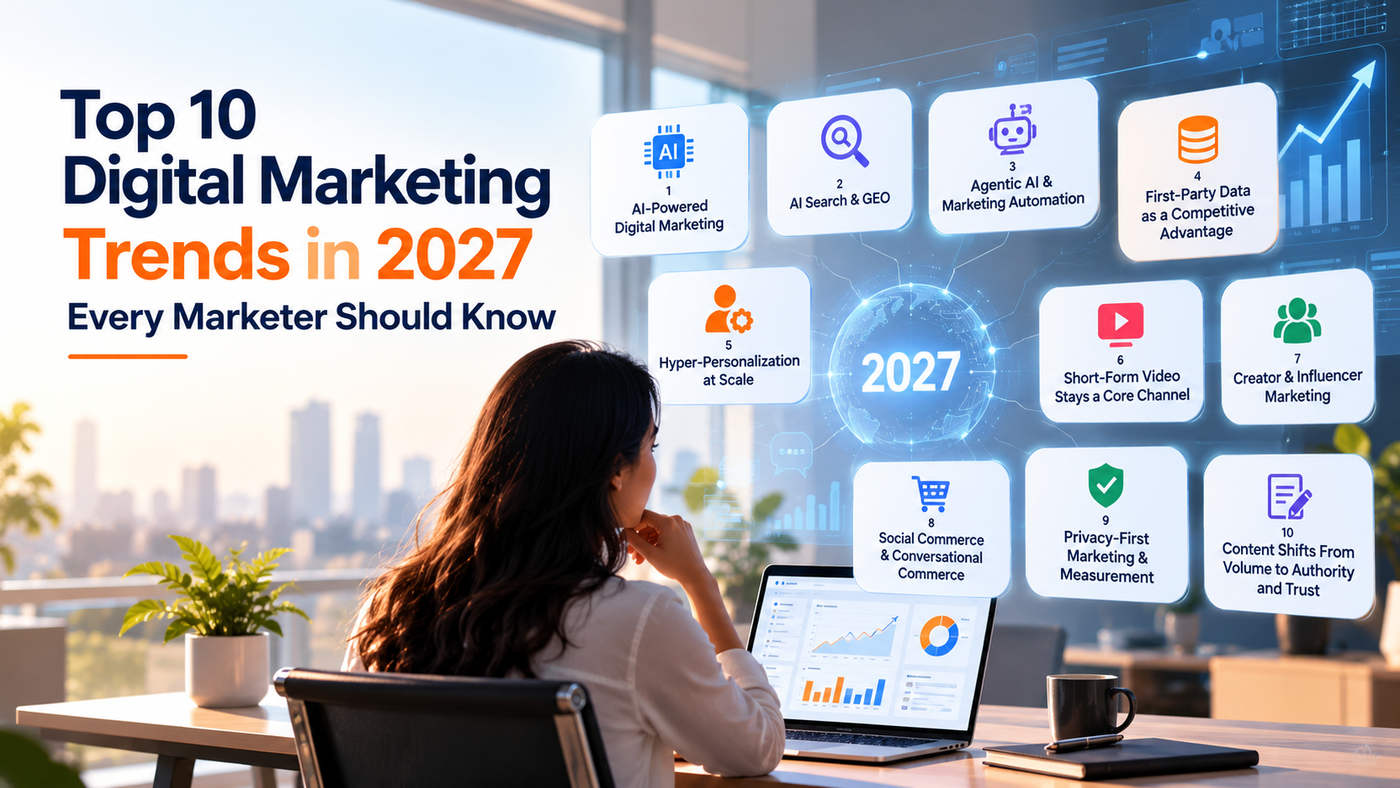
Search, content, data and automation are all shifting at the same time, so planning for 2027 means more than adding one new tactic. In this blog, we walk through ten trends: AI-led marketing, AI search and GEO, agentic AI, first-party data, hyper-personalization, short-form video, creator marketing, social and conversational commerce, privacy-first measurement, and authority-driven content. We finish with a practical plan to help you prepare. At Infinix360, a digital marketing agency in Chennai, we already see these changes showing up in client briefs every week.
1. AI-Powered Digital Marketing
AI is moving well past writing first drafts. In 2027 it will sit inside campaign planning, audience analysis, creative testing, customer engagement and optimization. Adoption is already high in India, where 81% of marketers surveyed by Salesforce said they had adopted AI. The edge will come from how well your team directs the tools, not from owning them.
2. AI Search and Generative Engine Optimization (GEO)
This is the trend that deserves the most attention. People increasingly ask a question and get one composed answer, instead of scanning ten blue links. AI systems pull that answer from content they can understand, trust and cite. Winning here means:
- Answering real questions directly, in plain language, near the top of the page
- Structuring pages with clear headings, short sections and useful FAQs
- Using schema markup so machines can read who you are and what you offer
- Building mentions and citations on credible sites, since AI tools lean on them
- Keeping facts, prices and details current across your website and profiles
Traditional SEO still matters, because the same signals feed AI answers. GEO simply asks you to be easier to quote. AI-referred traffic is growing quickly in commerce, which makes this a revenue question and not a vanity one.
3. Agentic AI and Marketing Automation
Automation used to follow rules you wrote. Agentic AI follows goals. These agents can analyze campaign results, create variations, handle customer conversations and support a buyer through the purchase journey with limited supervision. Gartner expects agentic AI to become a major part of personalized brand interactions. Marketers will spend less time on repetitive set-up and more time on strategy, guardrails and review.
4. First-Party Data as a Competitive Advantage
Tracking limits and rising privacy expectations are shrinking what third-party data can tell you. Businesses will lean on information they collect directly from their website, CRM, app, loyalty programme and customer conversations. The brands that ask for data fairly, and give something useful back, will end up with the richest picture of their audience.
5. Hyper-Personalization at Scale
Generic messages are easy to ignore. AI now makes it practical to tailor content, recommendations, offers and experiences to what each person intends and does. Think of an email that reflects the product someone viewed last night, or a landing page that changes for a returning visitor. The test is relevance. If personalization feels invasive, it backfires.
6. Short-Form Video Stays a Core Channel
Reels, Shorts and TikTok-style clips will keep winning attention. What changes is the standard. Audiences reward videos that teach something, show a real product in use, or answer a question. Search-friendly titles and captions help too, since video increasingly appears in search and AI results. Producing more clips matters less than producing better ones.
7. Creator and Influencer Marketing Gets More Authentic
Brands are moving away from big names, to credible creators with niche communities. “They want original content and measurable partnerships.” As AI generated material fills feeds, authenticity is a selling point, as is content provenance. A trusted influencer with a smaller following can outperform a celebrity post.
8. Social Commerce and Conversational Commerce
Buying journeys now begin inside social apps and AI assistants. Shoppers ask a chatbot for recommendations, watch a product demo on Instagram, and check out without leaving the platform. Brands will need clean product data, fast replies on messaging channels and a smooth path from discovery to payment.
9. Privacy-First Marketing and Measurement
Personalization and privacy have to coexist. Expect more weight on consent-based collection, privacy-enhancing technologies, secure measurement and openly stated data practices. Clear consent banners and honest explanations are no longer a legal chore. They shape whether customers stay willing to share information with you.
10. Content Shifts From Volume to Authority and Trust
Publishing large amounts of generic AI content is losing value. What rises instead is expert-led, original and experience-based writing. Strong authorship, evidence, first-hand insight, reviews, citations and consistent entity signals across the web tell both readers and AI systems that you are a source worth trusting.
How Businesses Can Prepare for Digital Marketing in 2027
You do not need to adopt everything at once. Pick the areas where your customers already spend time, fix the basics, then add one new capability each quarter. Use this checklist as a starting point:
- AI: Choose two or three tasks to automate, such as reporting or ad variations, and set clear human review steps
- SEO and GEO: Add FAQs and schema to key pages, and track whether your brand appears in AI answers
- Content: Replace thin posts with expert-led pieces that carry an author name and real examples
- Social media: Plan short videos around customer questions and work with a few credible creators
- Paid media: Test AI-assisted creative and feed your platforms clean first-party conversion data
- Data and analytics: Audit consent practices, tidy your CRM and make sure conversion tracking is accurate
Turning These 2027 Trends Into Results
The trends above point in one direction. Marketing is becoming more automated, more personal and more dependent on trust. Brands that earn that trust in search results, AI answers and social feeds alike will keep their visibility as the channels change. If you want help making your site easy for both people and AI to find, speak with one of the leading SEO companies in Chennai. At Infinix360, we help businesses across Chennai grow through SEO, GEO, content, social media and paid campaigns. Our team blends data, creativity and clear reporting so every rupee of your budget works harder, and we would be glad to start with an honest look at where your brand stands today.