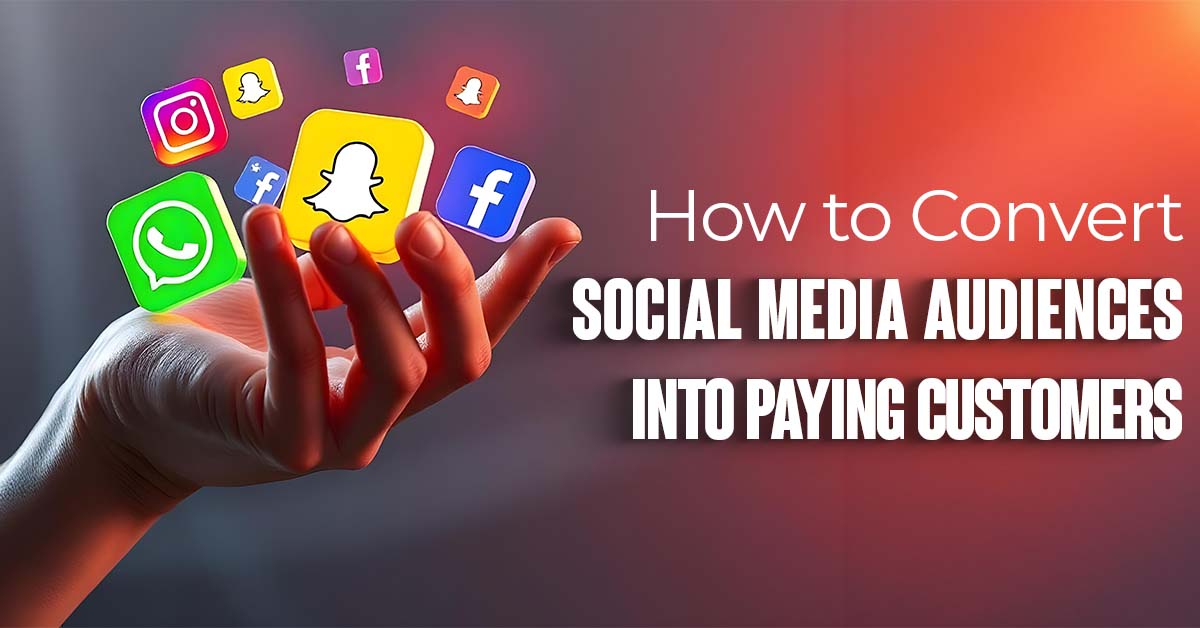
A massive follower count is often just a loud distraction. It feels good to see the numbers climb, but “likes” don’t pay the bills and “shares” don’t meet payroll. If your audience is merely watching your content for entertainment without ever crossing the line into a transaction, you don’t have a business; you have a hobby. The brutal truth is that 100,000 passive fans are worth significantly less than 1,000 high-intent prospects who actually trust your brand enough to open their wallets.
At our Social Media Marketing Services in Chennai, we see companies obsess over vanity metrics while their conversion rates crater. To convert social media followers into customers, you have to stop chasing fame and start engineering intent. Every piece of content must serve a strategic purpose: moving a user from a passive “thumb-stop” to an active off-platform action. If your social presence isn’t driving traffic to a checkout page or a lead form, it’s failing its primary job.
Mapping the High-Intent Journey: From Scroll to Sale
Converting a stranger into a customer isn’t an accident; it’s a psychological transition. Most brands fail because they expect a “buy now” reaction from a “just looking” audience. You have to bridge the Awareness Gap. This means moving a user from the mindset of “I like this content” to “I need this solution.” This shift happens when you stop highlighting your product’s features and start highlighting the user’s unsolved problems.
A successful social media conversion strategy is built on identifying and obliterating Friction Points. If a user clicks your link in bio only to find a slow-loading site, a confusing menu, or a forced account creation screen, they will leave. Every extra click is a reason for them to bounce. You aren’t just competing with other brands; you’re competing with the user’s short attention span.
Most people scroll past a single Reel without even thinking about buying your product. Start small instead. Give them a quick win: a free checklist, an invite to a private newsletter, or a one-time discount in return for an email. That pulls the discussion out of social clutter into your own channels. From there, you nurture real familiarity step by step and build brand trust on social media. By converting engagement into sales, you set up reliable leads that hold up even when feeds change rules overnight.
Trust Engineering: The Role of Social Proof in 2026
In a market saturated with AI-generated “perfection,” skepticism is at an all-time high. To convert social media followers into customers, you have to stop acting like a corporation and start acting like a trusted peer. Institutional authority is no longer built through expensive studio productions; it is built through the raw, unedited validation of your existing community.
The UGC Advantage
User-generated content (UGC) is the strongest currency in any social media marketing funnel. A shaky, 15-second iPhone video from a genuine customer often outperforms a $5,000 brand film because it feels real. It’s “social proof” in its purest form. When prospects observe someone resembling them using your product, their psychological resistance to buying decreases markedly.
Social Signals and Micro-Testimonials
Don’t ignore your comment section, it’s a live scoreboard. Prospective buyers look at how you interact with your audience to gauge your reliability. Furthermore, you should stop posting long-winded, boring testimonials. In 2026, the ’60-Second Case Study’ will be the focus. Convert in-depth success stories into short, impactful vertical videos that showcase the problem, the process, and the outcome. This speed-to-value strategy shows your benefits early on, before the user thinks about abandoning it.
Direct Response Social: Crafting Offers That Demand Action
If your social media content is “nice to watch” but doesn’t tell people exactly what to do next, you aren’t marketing, you’re just creating free entertainment. A high-performing social media conversion strategy requires a shift from passive storytelling to direct response. You have to create an environment where the path from discovery to checkout is so short that the user doesn’t have time to second-guess their decision.
The “Pain-Point” Hook
Most brands lead with features. They talk about their “24/7 support” or “premium materials.” This is a mistake. To succeed at converting engagement into sales, your “Lead-In” must focus on a specific, stabbing pain point. Instead of “We sell durable shoes,” try “Stop ending your workday with foot pain.” By solving the problem upfront, you establish yourself as offering the only clear solution.
Eliminating Checkout Friction
In 2026, every extra click is a 20% drop-off in revenue. You must leverage platform-native shopping features like Instagram and Facebook Marketplace. These tools allow users to purchase without ever leaving the app. When you reduce the journey to a single “Buy” button within the feed, you bypass the distractions of a mobile browser. This seamless experience is essential for maintaining the brand trust on social media you’ve worked so hard to build; users feel safer staying within the platform’s secure ecosystem.
The Checklist for Immediate Action:
- Story-Only Urgency: Release 24-hour “flash” deals exclusive to your Stories. This trains your audience to view your content immediately or risk missing out.
- Visual Cues: Use clear, high-contrast buttons and arrows in your creative to point exactly where the user needs to tap.
- The Single CTA: Don’t ask them to like, comment, and shop. Pick one goal and hammer it home.
Retargeting: The Art of the Second Impression
The uncomfortable reality of digital commerce is that 98% of people will not buy from you on the first encounter. They might like your post or even visit your site, but they leave before the transaction is complete. Retargeting is your tool to convert social media followers into customers by staying top-of-mind without being obnoxious. It’s not about stalking; it’s about continuing the conversation.
Sequential Storytelling
If a user saw your “Pain-Point” hook but didn’t buy, don’t show them the same ad again. Use sequential storytelling to show a different side of your brand. If the first ad was about the problem, the second should be about the results. Show the product in action or highlight a feature they haven’t seen yet. This layered approach deepens brand trust on social media because it proves you have more than one trick.
Eliminating the “No”
If a user saw your “Pain-Point” hook but didn’t buy, don’t show them the same ad again. Use a sequence of stories to reveal a different aspect of your brand. If the initial ad focused on the problem, the following should showcase the results. Demonstrate the product in use or emphasize a feature the audience hasn’t seen before. This layered approach deepens brand trust on social media because it proves you have more than one trick.
Conclusion: The Long Game of Social Revenue
Social media isn’t a vending machine. You don’t just “post content” and expect a flood of cash to follow. It’s a relationship game, plain and simple. If you seek sustainable growth, focus on building genuine human connections rather than constantly chasing the newest algorithm tricks. People buy from brands they actually trust, not just logos they’ve seen three times. As a Digital Marketing Company in Chennai, we see the same mistake everywhere: brands being too corporate. Consistency and raw honesty are the only real conversion drivers left in 2026.