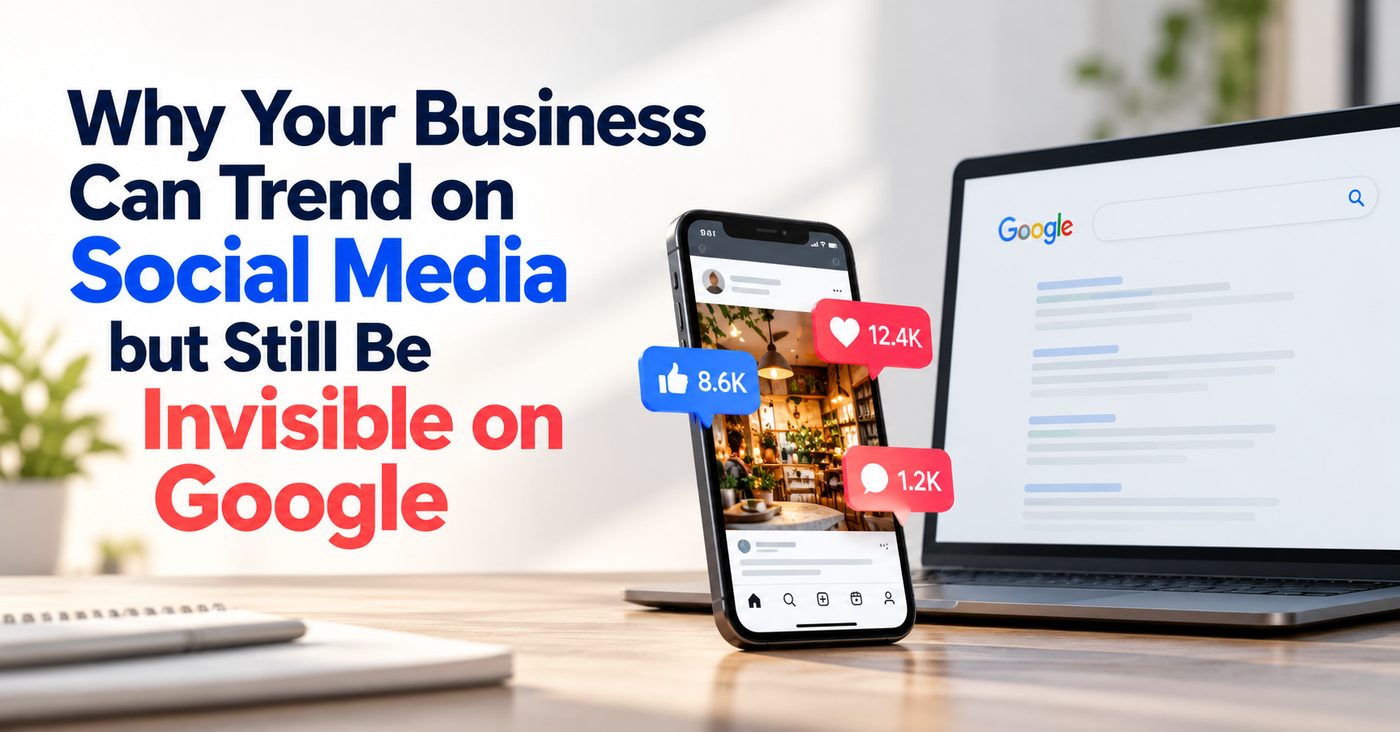
A reel with 200,000 views and a Google search for your brand name that returns nothing useful can describe the same business on the same day. Social platforms measure attention, while Google measures whether a page answers a specific query. Likes, shares and follower counts do not work as direct ranking signals, and most social platforms mark outbound links so they pass little or no ranking value. Brands that trend but stay invisible usually lack indexable service pages, content built around the words customers search, a complete Google Business Profile and consistent business details across the web. Closing that gap means matching each high-performing social asset to a page Google can index, tracking branded and non-branded impressions in Search Console, and writing answers that AI Overviews can cite. Infinix360, a Digital Marketing agency in Chennai, works with businesses that already have an audience and need it to show up as search demand. The sections below explain where visibility breaks and what to build to repair it.
Social Attention and Search Demand Measure Different Things
A follower sees your post because an algorithm placed it in a feed. A searcher finds your business because they typed a service or a question into Google and intend to act on the answer. Google serves the searcher, so it ranks pages that match the words, topic and intent of the query.
Google has stated that it does not use likes or follower counts as direct ranking factors. A viral post can still lift searches for your brand name, but those searches convert only when a page on your website answers them.
Why Social Reach Rarely Becomes Search Visibility
- Most social platforms add no-follow or similar attributes to outbound links, so a post that sends 10,000 visitors to your website passes little or no ranking value along with them.
- A post stays prominent in a feed for hours or days, while a ranking page builds links, relevance and engagement over months.
- Your Instagram or LinkedIn profile can appear for your brand name, yet it competes with your own website for that query and almost never targets the services you sell.
Common Reasons a Trending Brand Is Missing From Google
Audits of businesses with strong social followings return the same causes, and several usually occur together.
- The website has a homepage and a contact form but no dedicated page for each service or location, so Google has nothing to match against a query such as “wedding photographer in Chennai”.
- Service pages exist, but the copy repeats social captions and never covers pricing, process, timelines or the questions customers ask before buying.
- A no-index tag left over from staging, a robots.txt rule or content that loads only through scripts keeps Google from indexing pages the owner believes are live.
- The Google Business Profile is unclaimed, half complete or lists a phone number that differs from the website, which weakens local results.
- The brand name matches other businesses, and no About page, structured data or consistent profile links tell Google which entity is yours.
A Typical Case: High Reach, Low Search Presence
Consider a home bakery whose reel reaches 300,000 viewers. People search the bakery’s name and find the Instagram profile and a delivery app listing, while the bakery’s own website sits on page two because it contains a single menu image that crawlers cannot read. Orders come from followers who already knew the brand, and nobody searching for custom cakes nearby finds it.
Pages for each cake category, delivery areas, ordering lead times and price ranges, together with a complete Business Profile, give those searches something to return.
Turning Social Content Into Search Visibility
Every high-performing social asset can feed a page that targets a query. The table shows the pairings we map first.
Comments give you keyword research in the exact words customers type into Google. We export the ten most engaged posts from the last six months, group them by topic and assign each topic to an existing or new page before any new content is written.
Measuring Results and Earning AI Overview Citations
Google Search Console separates branded queries from non-branded queries. If branded impressions rise after each campaign while non-branded impressions stay flat, your campaigns create awareness and your website lacks pages that answer what new customers search for.
AI Overviews draw on pages Google has indexed, so a page missing from the index cannot be cited. Pages that state the answer in the first lines, name the business and its location consistently, and carry structured data for the organisation and the service give Google the details it needs.
Conclusion
Trending posts build an audience, and ranking pages capture the demand that audience creates. Brands that connect the two with indexable service pages, a complete Business Profile, consistent entity details and Search Console reporting convert attention into enquiries that continue after a post leaves the feed. Businesses that hire SEO companies in Chennai for this work should expect the audit to cover the website, the social profiles and the Business Profile together.
Start with your five most engaged posts and check whether a page on your website answers the question each one raised.
Frequently Asked Questions
Does social media activity improve Google rankings?
Google does not use likes, shares or follower counts as direct ranking factors. Social activity helps indirectly when it generates branded searches, mentions on other websites and links from publishers who discover your content.
Why does my business appear on Instagram but not on Google?
Instagram profiles rank for brand names because they sit on a strong domain. Your own website will not appear for service searches unless it has indexable pages that target those searches, and the Search Console Pages report shows which of your URLs Google has excluded.
How long does a new service page take to appear on Google?
Indexing usually takes a few days to a few weeks, depending on how often Google crawls your website and whether you submit the page through Search Console. Ranking for competitive terms commonly takes three to six months because the page has to earn links and engagement.
Can a Google Business Profile solve local invisibility without a website?
A complete profile can place your business in map results for local searches, particularly when the name, address and phone number match your other listings. It cannot rank for broader informational searches, so service pages on a website extend your visibility to queries a profile does not cover.
Should I reduce social media posting to focus on SEO?
Social content builds awareness, and search pages capture buyers who already know what they want, so cutting one rarely helps the other. Use your best-performing posts to decide which pages to build first.