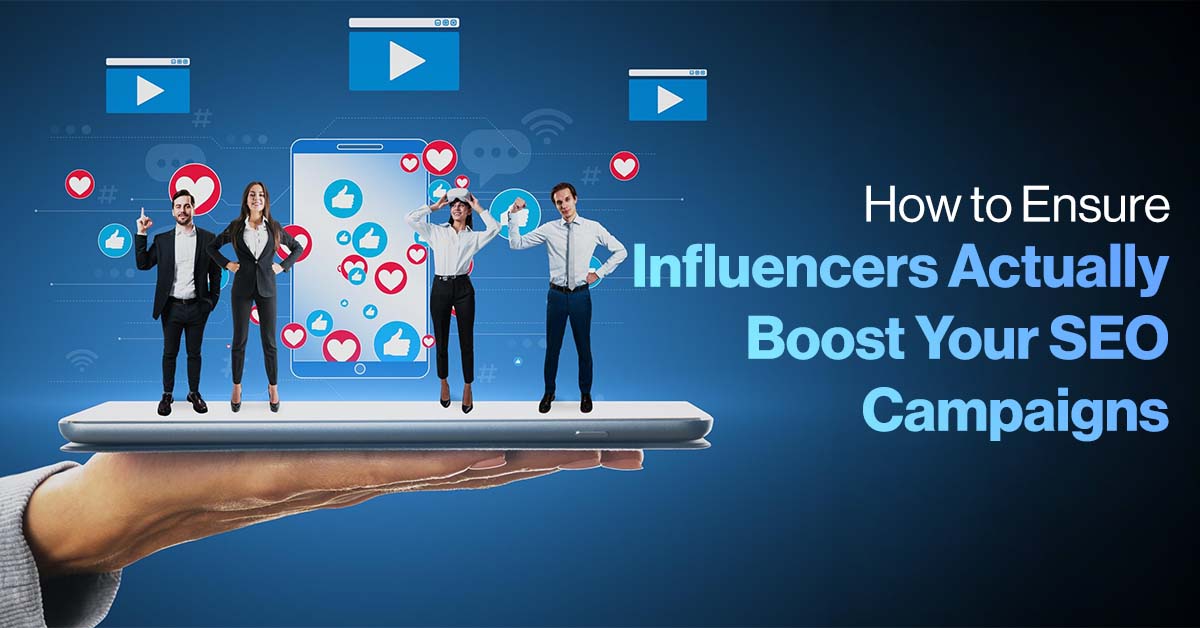
Most brands treat social media and search engines as two isolated silos. They hire an influencer for a weekend shoutout and then wonder why their organic rankings haven’t budged on Monday morning. If you are working with a Digital Marketing agency in Chennai, you might realize that the gap between a “like” and a “link” is wider than most consultants admit. Influencers generally operate on platforms that use no-follow tags for almost every outbound link. This means the direct “link juice” you are hunting for is practically non-existent. However, the influencer impact on SEO is real, provided you stop looking for direct backlink equity and start looking at brand signals. Google does not just crawl links. It crawls sentiment, mentions, and the authority of the people talking about you.
Can influencer marketing boost organic traffic
The short answer is yes, but not through the channels you expect. When a high-authority figure mentions your brand, they trigger a surge in “branded search” volume. This is a massive signal to Google. If thousands of people suddenly search for your specific product name instead of a generic category, the algorithm begins to view your site as an entity of significance. This halo effect is one of the primary influencer marketing SEO benefits. It isn’t just about the referral traffic from a link in a bio. It is about the secondary wave of users who open a new tab and search for you directly.
Branded search volume is a proxy for authority. Google’s Knowledge Graph builds associations between entities. If a known expert in financial planning is consistently linked to your insurance portal, the search engine begins to associate your “entity” with their “expertise.” This builds the trust signals from influencers that are now critical under Google’s E-E-A-T (Experience, Expertise, Authoritativeness, and Trustworthiness) guidelines. You are essentially borrowing the influencer’s credibility to verify your own site’s legitimacy.
How to use influencers for SEO
To turn a social mention into a search ranking, you need a tactical roadmap. You cannot leave the content strategy entirely in the hands of the creator. They know how to get views, but they rarely know how to structure a campaign for a crawler.
- Demand Long-Form Blog Content: If an influencer has a high-domain authority blog, a backlink from a contextual article is worth a hundred Instagram stories. Social links are ephemeral. A blog post is indexed and provides permanent value.
- Anchor Text Control: Ban “click here” labels. Use descriptive keywords so search engines understand the context of your landing page.
- Video Optimization: The YouTube description box is indexable territory. A link and a transcript transform a video mention into raw, searchable text that search bots can actually crawl.
- Co-Citation: Being mentioned in a “Top 10” list next to industry giants forces an algorithmic association. Google clusters your entity with those established authorities. It is authority by association.
- Syndication: Embed their videos on your own landing pages. This keeps users on your site longer. High dwell time is a key signal for organic health. It turns a temporary social post into a permanent site asset.
The Problem with No-Follow Links
Most social media platforms automatically apply a no-follow attribute to links. Technically, these do not pass authority. However, the modern SEO reality is that Google treats no-follow as a “hint” rather than a strict rule. If a link generates significant, high-quality traffic from a relevant audience, the algorithm notices. It sees the “social proof” in action.
The influencer marketing SEO benefits go beyond the technicality of the link. It is about the social signals, shares, comments, and engagement that prove your content is being consumed by humans. A site that gets zero social engagement but has thousands of mysterious backlinks looks like a PBN (Private Blog Network) to a manual reviewer. Influencers provide the “proof of life” that makes your backlink profile look natural. They are the organic layer that hides the clinical work of a technical SEO team.
Diversifying the Backlink Profile
A healthy website needs a mix of link types. If 90% of your links come from “guest posts” on obscure sites, you are a target for the next core update. Influencers provide a different type of link profile. They provide “unlinked brand mentions” and “social citations.”
Google has become incredibly adept at “inferred links.” Even if an influencer doesn’t link to you but mentions your brand name in a high-engagement post, the search engine records that mention. These are the trust signals from influencers that act as a safety net for your domain. It makes your site look like a genuine brand that people actually care about, rather than just a collection of optimized keywords.
The Lifecycle of Influencer Content
The biggest waste in digital marketing is the “one-off” post. You pay for a post, it stays at the top of the feed for six hours, and then it is buried forever. To help your SEO, you must extend the shelf life of this content.
- Repurpose into FAQs: Use the questions people ask in the influencer’s comment section to create a “People Also Ask” style FAQ section on your site.
- Local SEO Gains: If you are a local business, work with micro-influencers in your specific city. Their localized content helps you rank higher in the “Map Pack” because it provides geographic relevance to your business entity.
- Testimonial Integration: Convert influencer quotes into schema-marked testimonials on your product pages. This improves your click-through rate (CTR) from the search results page.
Measuring the Outcome Without Vanity Metrics
Stop counting “reach.” Reach is a made-up number that doesn’t pay the bills. Instead, look at your Search Console. Are you seeing an uptick in impressions for your brand name? Are you seeing new referral domains appearing in your backlink report? These are the metrics that matter.
If you are a high-volume site, you should see a correlation between influencer campaign dates and a “crawling” spike. When Google sees a lot of external noise about a site, it sends its bots more frequently to see what has changed. This is a subtle but powerful benefit. Frequent crawling means your new content gets indexed and ranked much faster than a stagnant site.
The Conflict Between Creativity and SEO
Influencers hate being told exactly what to say. If you give them a script full of “keyword-rich” phrases, the content will sound robotic and the engagement will tank. This is the delicate balance you must maintain. You need the “human” engagement to get the SEO signals, but the influencer needs their creative freedom to get that engagement.
The best way to handle this is to provide a “context brief” rather than a script. Tell them the concepts you want to be associated with. Let them find the words. The goal is “Natural Language Processing” (NLP) relevance. If they use synonyms of your keywords, that is actually better for your SEO than repeating the same phrase five times. It builds a broader “topical authority” for your site.When you hire a professional SEO company in Chennai, they will tell you that link building is getting harder every month. Manual outreach is being ignored, and guest posting is becoming a footprint for penalties. Influencers are the new frontier for high-quality, safe, and effective off-page optimization. They provide the human signals that search engines are increasingly using to verify who is a real player and who is just a clever optimizer. By aligning your social spending with your search goals, you ensure that every rupee spent on a creator is also an investment in your long-term organic stability.