A business sets aside a decent budget for Google or Meta ads, picks a few keywords, writes some ad copy, and waits for sales. A month goes by, and the dashboard shows clicks and impressions, but the phone is not ringing, the cart is not filling up, and the leads are barely trickling in. So they blame the platform, cut the budget, and walk away thinking paid ads do not work. The truth is, the ads were probably fine. What was missing was a proper advertising funnel strategy that guides a stranger through a sequence of steps before asking them to buy. Without that structure, you are essentially paying to bring people to your door and then leaving the door locked. If your campaigns are bleeding money, working with a PPC company in Chennai like infiniX360 can help you build the kind of funnel that turns ad spend into actual revenue.
What Happens When You Skip the Funnel
Think about how you buy things online. You rarely see an ad for something you have never heard of, click it, and buy it on the spot. You might click, browse, leave, come back three days later, read a review, compare two options, and then buy. That is normal buying behavior. But most paid ad campaigns are built as if that entire journey happens in one click.
When there is no funnel, all your budget goes to one type of ad, usually a “buy now” or “get a quote” message aimed at cold audiences. Some of those people click out of curiosity, but very few convert because they are simply not ready to commit yet. You end up paying full price for window shoppers.
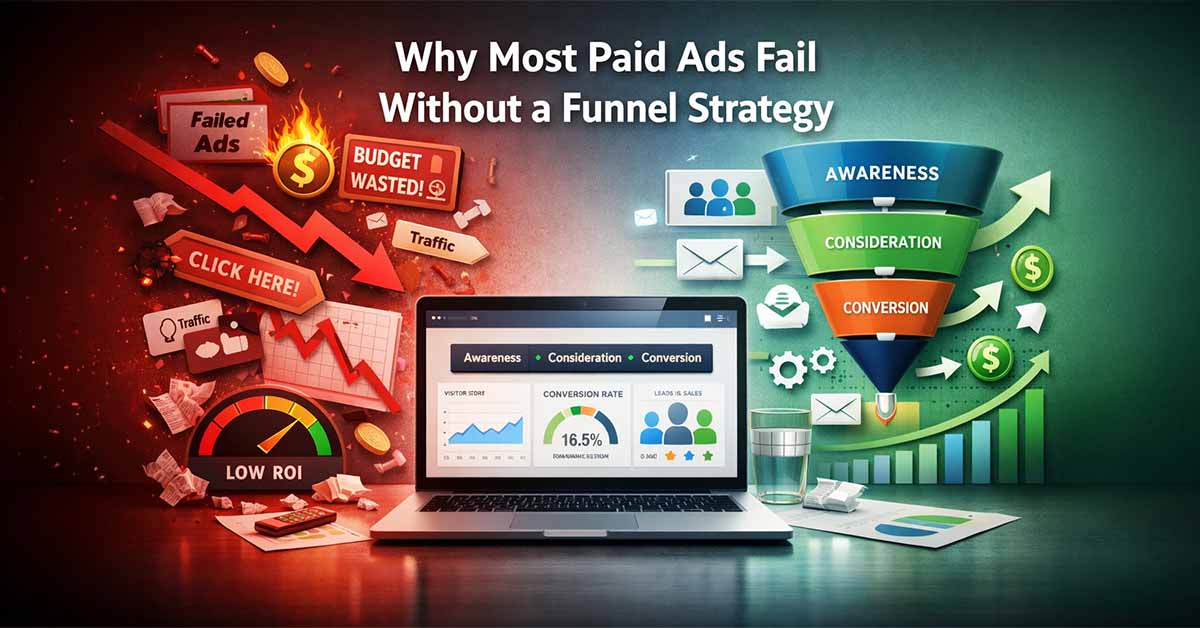
A sales funnel for paid ads breaks the buying journey into stages. At the top, you run ads that create awareness: educational videos, blog posts, problem-awareness content. In the middle, you retarget people who engaged with those ads, showing them testimonials, case studies, or product comparisons. At the bottom, you push offers and urgency to people who have already visited your site or added something to their cart. Each layer costs less per result because the audience is warmer.
Common Paid Advertising Mistakes
These are the errors that drain budgets fastest, and most businesses make at least three of them at the same time.
Treating every click as a sales opportunity. Not everyone who clicks your ad is ready to buy, as many are still researching or comparing options. When your landing page immediately pushes a purchase, you lose everyone who needed more information first. Match landing page intent to ad intent so that awareness ads lead to content while conversion ads lead to a product page.
Running one campaign for all audiences. Cold audiences, warm audiences, and hot audiences need different messages. A person who has never heard of your brand needs a different ad than someone who spent four minutes on your pricing page yesterday. Treating them the same wastes money on both ends.
No retargeting setup. This is the most common leak. Someone visits your site, looks at a product, and leaves. Without retargeting, that person is gone. You paid for their click and got nothing in return. An advertising funnel strategy always includes retargeting because that is where the cheapest conversions live. People who already know you convert at three to five times the rate of cold traffic.
Measuring the wrong things. Clicks and impressions look good in a report, but they do not tell you if you are making money. Cost per acquisition, return on ad spend, and customer lifetime value are the numbers that matter. If you are not tracking these, you are flying blind.
Sending all traffic to the homepage. Your homepage is for general visitors. It is not built to convert someone who clicked an ad about a specific product. Every ad should have a dedicated landing page that continues the conversation the ad started.
Setting and forgetting. Paid ads are not billboards. They need weekly attention: adjusting bids, pausing underperformers, testing new creative, and shifting budget toward what is working. Brands that launch a campaign and check back a month later almost always overspend on the wrong things.
How to Fix Low Converting Ads
If your ads are generating traffic but not revenue, the problem is usually structural. Here is where to start.
Map your funnel before you write a single ad. Decide what happens at each stage. Stage one: what will a stranger see? Stage two: what will someone who engaged see next? Stage three: what will a warm lead see before they buy? Write down the content, the audience, and the goal for each stage. This is your sales funnel for paid ads, and it should exist before you spend a single rupee.
Create separate campaigns for each funnel stage. Top-of-funnel campaigns target broad audiences with educational or entertaining content. Mid-funnel campaigns retarget people who watched your video or visited your site. Bottom-funnel campaigns target cart abandoners or pricing page visitors with urgency-based offers. Each campaign gets its own budget and its own success metric.
Fix your landing pages first. Before increasing ad spend, make sure the pages people land on are doing their job: load time under three seconds, a clear headline that matches the ad, one call to action instead of five, social proof above the fold, and a mobile-friendly layout. These are basics, but most brands skip at least two of them.
Write ads that qualify the click. Vague ad copy attracts vague traffic. If your ad says “Best Solutions for Your Business,” you will get clicks from people who have no idea what you sell. State the product, the price range, or the problem you solve. The click might cost more, but the person behind it is more likely to convert.
Build a retargeting sequence, not a single retargeting ad. Show different messages at different intervals: a product reminder on day one after a site visit, a customer review on day three, and a limited-time discount on day seven. This sequence mirrors how people actually make decisions instead of repeating the same ad until they tune it out.
Review and adjust weekly. Check which ads have the lowest cost per conversion, pause the underperformers, and move money toward what is working. Testing new headlines every two weeks and making small, frequent adjustments will beat big quarterly overhauls every time.
Why the Funnel Is the Strategy
The difference between brands that profit from paid ads and brands that lose money on them is rarely the platform, the industry, or even the budget. It is about structure. A well-built funnel gives every rupee a job, with awareness rupees building your audience, consideration rupees warming them up, and conversion rupees closing the sale. Without that structure, all your money does the same thing: shout at strangers and hope someone listens.
Paid advertising works when the structure behind it is sound. Running ads without a funnel is like hiring a sales team and telling them to skip the introduction, skip the pitch, and just ask for the credit card.If your campaigns have been underperforming despite changing creative, tweaking targeting, and raising budget, the missing piece is the funnel. A digital marketing company in Chennai like infiniX360, with 13 years managing paid campaigns for over 500 brands, can help you build an ad structure that follows how people actually buy. That is where the returns start.