A business owner in Anna Nagar updates the company website every month. The owner adds blog posts, refreshes service pages, and still sees a competitor ranking higher when people search for the same service. The pages use the right keywords. What search engines struggle with is understanding who the business is, what it offers, and where it works. Entity-based SEO addresses that problem by organising content around clearly defined businesses, people, places, and services instead of isolated phrases. This article covers what entities are, how AI Overviews use them, and how a local business can apply the approach. At Infinix360, we see the same issue in many website audits: a brand that a search engine cannot identify with confidence is hard to show in results. Any SEO company in Chennai working on visibility now needs to start from entities, not keyword lists.
What an Entity Means in Search
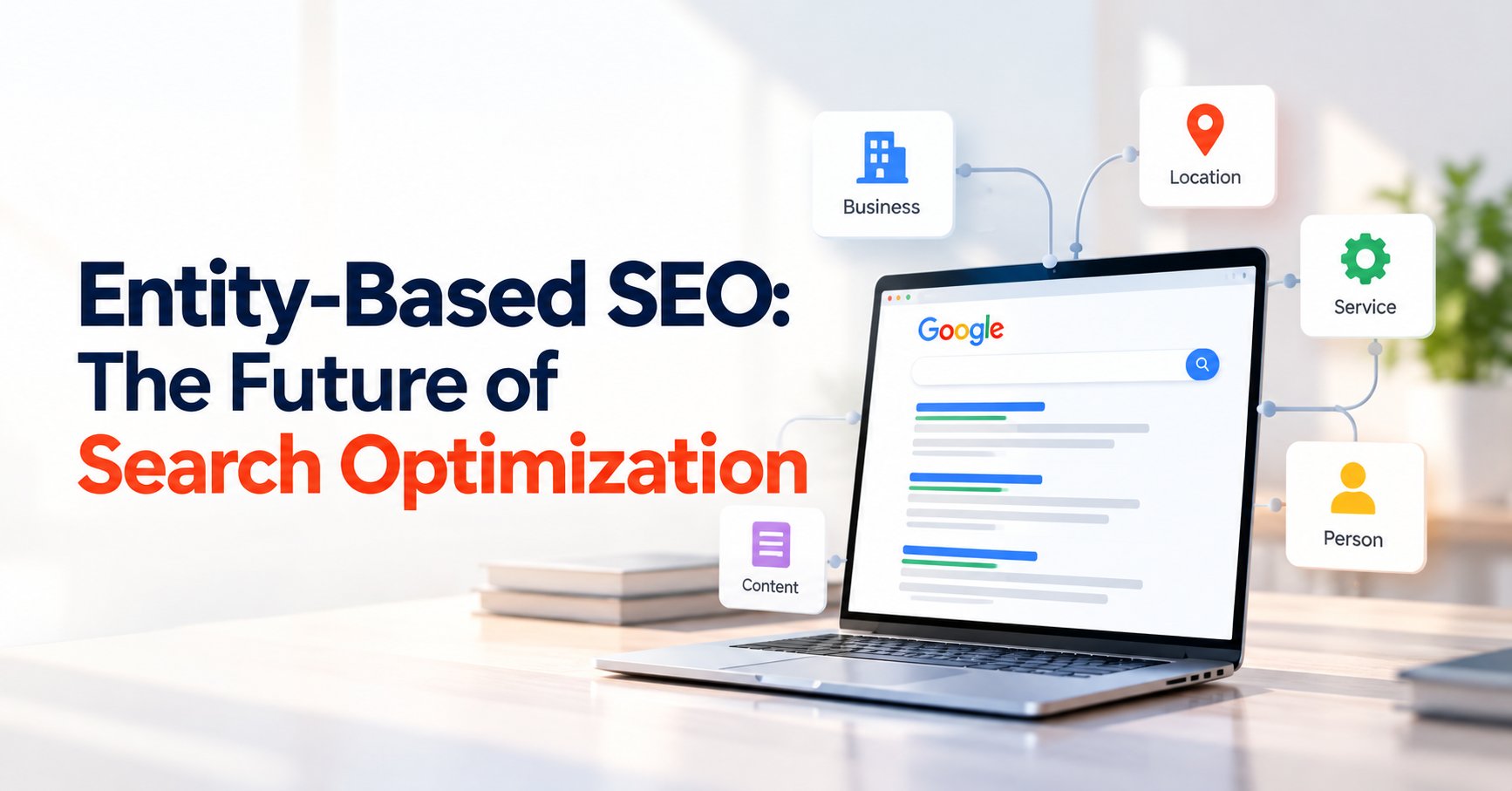
An entity is a distinct thing that a search engine can recognise and describe. A business, a person, a product, a city, or a service all qualify. Google stores these in its Knowledge Graph, together with the facts linked to each one, such as location, category, founder, and related topics.
A keyword is a phrase someone types. An entity is the subject behind that phrase.
When a person searches for “baking classes near Adyar,” the search engine does not only match those words. It identifies a type of service, a neighbourhood, and the businesses that fit both. If your site never states clearly what you offer and where you offer it, the match is weaker than your content deserves.
Do Keywords Still Matter?
You may be wondering whether this makes keyword research pointless. It does not. Keywords still show what people want and how they phrase it, and your pages should still use them in headings, titles, and body text.
What has changed is how much weight a keyword carries on its own. A page that repeats a phrase eight times but never gives an address, a list of services, or a named author offers little for the system to classify. A page that uses the phrase twice and states those facts plainly is easier to place.
Keyword research tells you what to talk about. Entity work makes sure the search engine knows who is talking.
How Search Engines and AI Overviews Use Entities
AI Overviews and similar summaries draw from sources the system considers reliable. To judge that, the system compares information across your website, your Google Business Profile, directories, social profiles, and third-party mentions. When the details agree, your business is treated as one consistent source. When they differ, confidence drops.
In our audits, a common cause is small. A brand name written two ways, an old phone number on a listing from 2019, or a service described differently on each page. Together, they can leave a business out of an AI-generated answer even when its pages rank well.
Signals That Strengthen Your Entity
You can build entity strength with a short set of practical actions. These are the ones we prioritise first:
- Your business name, address, and phone number should read the same on your website, your Google Business Profile, and every directory listing. Even “Pvt. Ltd.” on one and “Private Limited” on another splits the signal.
- Organization or LocalBusiness schema belongs on your home page and contact page. The sameAs property can point to your official social and directory profiles.
- Each article needs a named author. A short biography with qualifications, and a link to the author’s other published work where it exists, gives readers and search engines something to check.
- When a service page touches a related topic, link to the page that covers it, and describe that page in the anchor text. “Our guide to LocalBusiness schema” says more than “read more.”
- Mentions from industry associations, local business bodies, and trade publications help confirm where your business sits in its field.
Schema does not replace good content. It labels content that already exists, and it must match what visitors can read on the page.
Where EEAT Fits In
Experience, expertise, authoritativeness, and trust are always judged about someone or something. The search engine needs to know who that is before it can assess any of the four.
A health article published under a generic “Admin” byline gives the system no person to evaluate. The same article under a named doctor, with a profile page listing registration details and years in practice, gives it something to verify. The text may be identical. The credibility signal is not.
Experience matters here too. First-hand detail, such as the steps your team follows on a project, the problems you run into, and the results you measured, is difficult to copy and easy for readers to trust.
Applying Entity SEO to Local Search in Chennai
Local search depends heavily on entities, because every query carries a place. A search from T. Nagar, Velachery, or OMR points to a different set of businesses than the same search from Tambaram. The process below works for most service businesses in the city:
- Write down your legal name, primary services, and service areas, and use that wording everywhere.
- Fill in every section of your Google Business Profile: primary category, services, opening hours, and photos of your premises and recent work.
- Build a separate page for each service and each area. Each page should carry details that belong only to it, such as local landmarks, typical project types, and the questions customers in that area ask.
- Collect reviews and reply to them. Customers often mention the service and the neighbourhood in their own words, which adds context the search engine can read.
- Add LocalBusiness markup that repeats the same details a visitor sees on the page.
Results from this work usually show over several months, not weeks.
Mistakes to Avoid and What to Measure
Some readers reasonably ask whether this effort will pay off, since the changes are less visible than a new landing page.
The mistakes we see most often are marking up details in schema that do not appear on the page, copying one service description across several locations, leaving outdated listings active, and expecting rankings to move within days.
For measurement, watch branded search impressions in Google Search Console, the appearance of a knowledge panel for your business name, the accuracy of your Google Business Profile information, and whether your pages are cited in AI Overviews for your core topics.
How to Build a Strong Business Entity for Better Search Visibility
Go back to the business owner from the beginning. The content was fine. What the business needed was a consistent name across its listings, a profile that named the team’s qualifications, service pages that stated the areas served, and schema that matched all of it. Once those details agree, a search engine can describe the business accurately and decide when to show it.
The same applies to your site. When you evaluate a digital marketing agency in Chennai, ask how it will define your business as an entity, which sources it will use to verify your details, and which measures it will report each month.