Type a question into Google today, and there’s a good chance you’ll have your answer before you even think about clicking anything. No website visit, no scrolling through ten blue links. That’s a zero-click search, and it’s quietly rewriting the rules of SEO for everyone, including any digital marketing agency in Chennai trying to keep client rankings meaningful. It’s not a niche behaviour either. It touches how content gets written, how businesses show up locally, and how success gets measured. In this blog, we will take a closer look at what zero-click searches actually mean and how you can adjust your SEO strategy to stay visible even when users never leave the results page.
So What Is a Zero-Click Search, Really
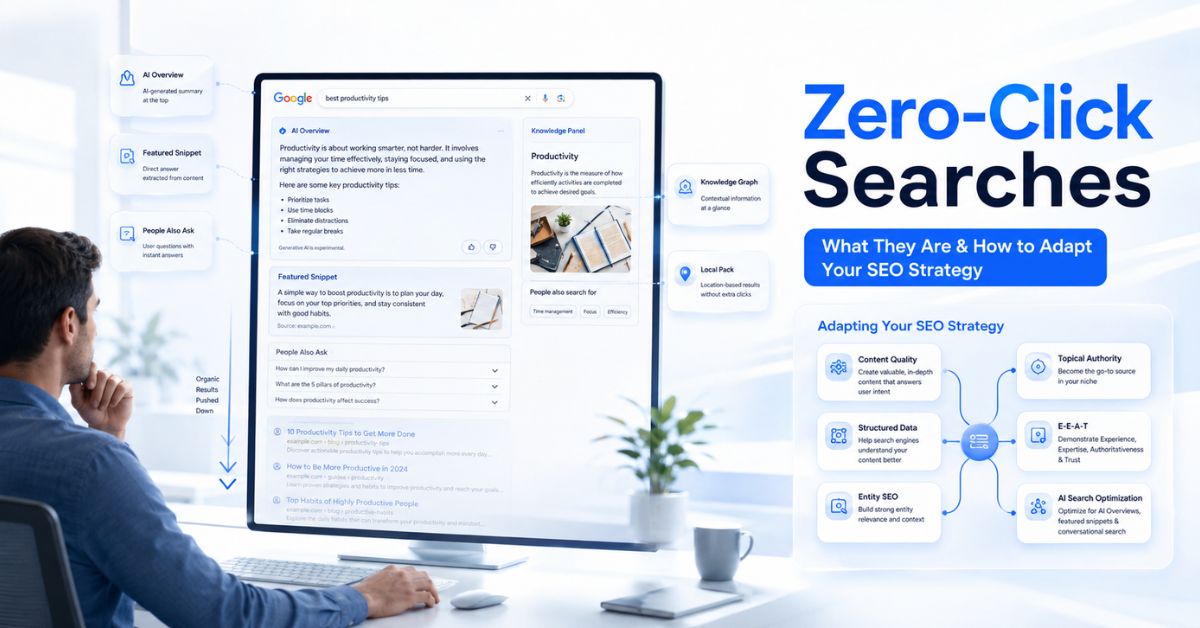
Ask Google “what’s the weather in Chennai,” and the answer sits right there, no tap required. Same with “how far is Coimbatore from Chennai” or “best time to visit Ooty.” Featured snippets, knowledge panels, the local pack, even that “People Also Ask” box that keeps expanding as you scroll- they all fall into this category.
This has stopped being a fringe pattern. A huge chunk of searches now end without anyone clicking through to an outside website. Google answers the question itself, pulling from structured content across the web and keeping the user right where they are.
Why Businesses Should Actually Care
For years, traffic was the scoreboard. Rank well, get clicks, turn those clicks into leads. Zero-click search throws a wrench into that logic. You could rank first, land inside a featured snippet, and still see nobody land on your site.
That sounds bad on paper, and for some businesses it genuinely stings. But there’s a part of this most people overlook. Showing up in a snippet or knowledge panel again and again builds recognition. People start to notice your name. Even without a click that day, they remember you when they need something more detailed later.
It Doesn’t Hit Every Industry the Same Way
Local businesses often come out ahead here. A search for “AC repair near me” or “best biryani in Chennai” instantly pulls up the local pack, complete with ratings, phone numbers, and directions. Someone might just call the number without ever opening the website.
Content sites and online stores don’t get off as easily. When people get their answer straight from the results page, there’s no reason to click through to a blog post or a product listing. So generic SEO advice doesn’t cut it anymore. What works for a local plumber won’t work the same way for an e-commerce brand, and treating them the same way is a mistake many businesses still make.
Adjusting Strategy for This New Reality
None of this means SEO has stopped working. It means the goalposts moved, and strategy needs to move with them.
- Write for the snippet. Answer the core question early, within the first line or two of a section, without burying it under filler. Google rewards directness here more than anywhere else.
- Get local SEO right. Keep your Google Business Profile accurate, complete with hours, photos, and contact details. Service businesses depend on this far more than they realise.
- Add schema markup. It gives search engines a clearer read on your content, which improves your odds of landing in FAQs, how-tos, or review-rich results.
- Write the way people actually talk. People don’t talk like they type into a keyword tool, so voice search rewards content that sounds like an actual conversation instead of a checklist of terms crammed together.
- Build depth around topics, not just keywords. A cluster of connected content signals real expertise, and that’s what earns Google’s trust when it decides who to quote.
Re-thinking What Success Looks Like
If clicks alone don’t tell the full story anymore, what does? Impressions and average position inside Google Search Console give a much better read on visibility now, even when the click never happens. A rise in branded search is another strong signal. If people start typing your business name directly after seeing you in a snippet, your content is working, whether or not they clicked that first time.
For local businesses especially, tracking calls, direction requests, and profile interactions tells a far more honest story than click counts ever could.
Where This Is Headed
Zero-click search isn’t a phase that fades out. If anything, AI-driven search is pushing it further, not pulling it back. Businesses that adjust now, focusing on visibility rather than obsessing over clicks, will be the ones still standing strong as search keeps shifting shape.
This is really a shift in what winning looks like. It’s not just about pulling traffic anymore. It’s about being the name people trust and recognise at every point of their search, including the moments that never turn into a click.
At Infinix360, we’ve watched this shift play out with our own clients, and it’s changed how we think about visibility altogether. We don’t chase clicks as the only measure of success anymore. Instead, we help businesses build a presence that shows up everywhere their audience is looking, whether that leads to a website visit or not. Our team works closely with every client to shape content around real search behaviour, keep local listings sharp, and build the kind of topical depth that search engines trust enough to quote. If staying visible in this new search landscape matters to your business, partnering with one of the established SEO companies in Chennai is a good place to start.
Faqs
1. Can zero-click searches increase brand awareness?
Yes. Appearing in featured snippets or knowledge panels keeps your brand visible, making users more likely to remember and trust your business for future searches.
2. Do zero-click searches affect mobile users more than desktop users?
Yes. Mobile users often prefer instant answers, making zero-click results more common on smartphones where quick information is a priority.
3. Does every search query result in a zero-click search?
No. Transactional and complex research queries still encourage users to visit websites for detailed information, comparisons, or purchases.
4. Can small businesses compete for zero-click search visibility?
Absolutely. By creating helpful, well-structured content and maintaining accurate business information, small businesses can earn visibility alongside larger brands.
5. Will AI-powered search make zero-click searches more common?
Yes. As AI-generated search experiences expand, users are likely to receive more direct answers, making search visibility increasingly important beyond traditional website clicks.